Have you ever had the experience of clothes that worked perfectly back home suddenly looking completely wrong the moment you moved to Malaysia? In a hot, humid, year-round-summer climate, you only get real “polish” and “coolness” together once you match your fabric choices to your own body shape type. Drawing on what I’ve learned facing exactly this climate firsthand as a professional stylist of thirteen years living in Malaysia, I’m YUKI, and here I’ll share the standards for choosing clothes that keep you from looking heavier or older in year-round summer heat.
*If you don’t yet know your own body shape type, I’d recommend checking first with What Is Body Shape Diagnosis? The Complete Easy Self-Check Guide — the rest of this article will feel much more relevant to your own situation once you have.
What actually makes people look “older” or “heavier” in Malaysia’s climate?
The single biggest cause of looking older or heavier in year-round summer heat is fabric wearing out under high heat and humidity, leaving you with a more tired impression than your actual age.
Fabric that absorbs sweat and humidity loses its shape, and can develop sheerness or a clammy look. Once your fabric starts looking worn out, it drags down the mood around your face too, and that “tired look” becomes a “look older” impression. Even in professional work, I’ve found that the condition of your fabric affects a first impression just as much as your complexion does. One clarification: “not looking older” here doesn’t mean anything about your actual age — I’m using it specifically to mean maintaining a younger “impression age” through fabric and silhouette free of wrinkles, lost shape, and clamminess.
I had this experience myself early on in Malaysia — I kept wearing a polyester blouse I’d loved in Japan, and it didn’t go well. Some fabrics flap around in the wind and end up looking restless, and on top of that, poor heat release makes you feel even hotter. It’s a double downside: it doesn’t look great, and it isn’t comfortable either — something I only really understood once I lived it.
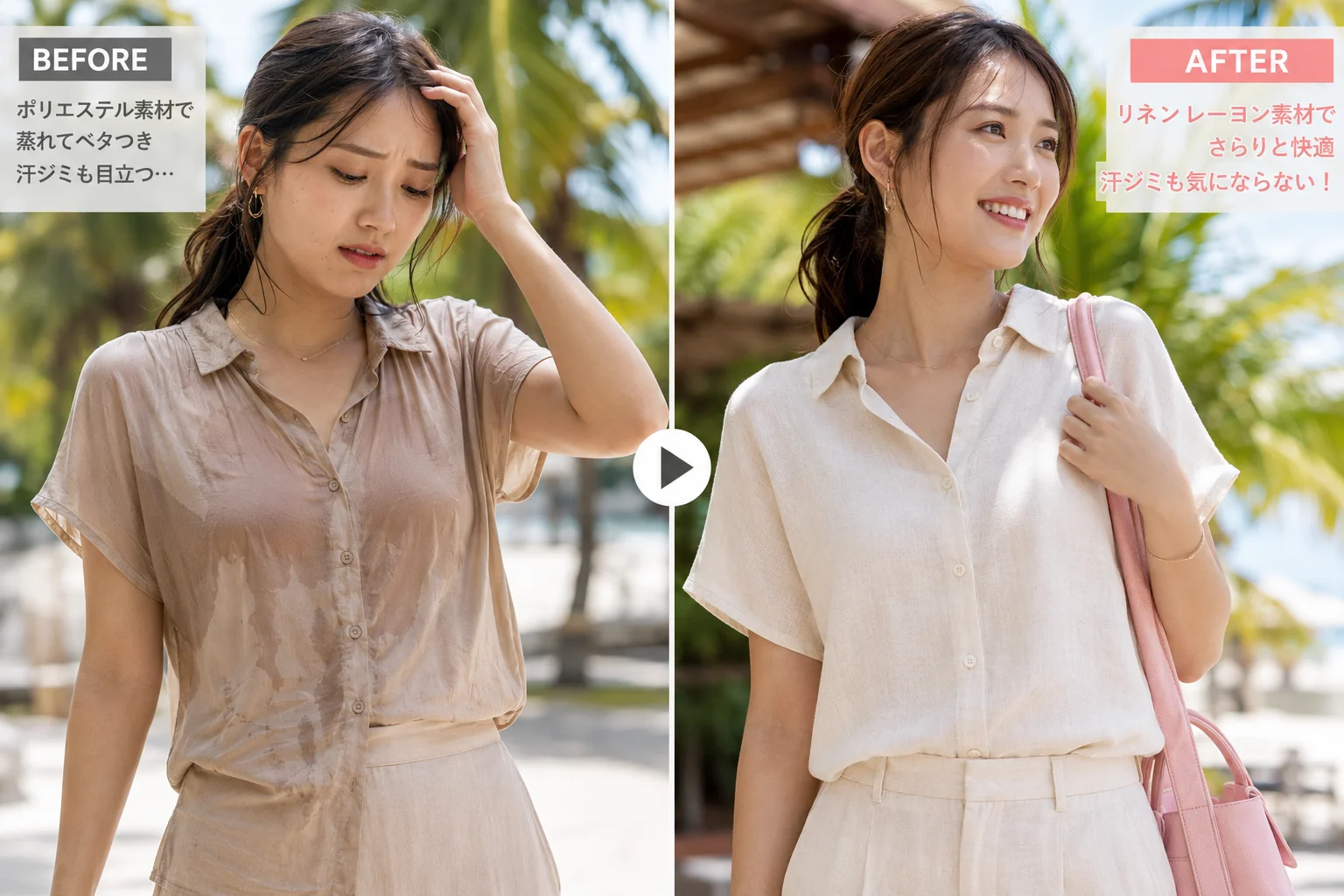
What’s the standard for choosing fabric that won’t fail you in year-round summer heat?
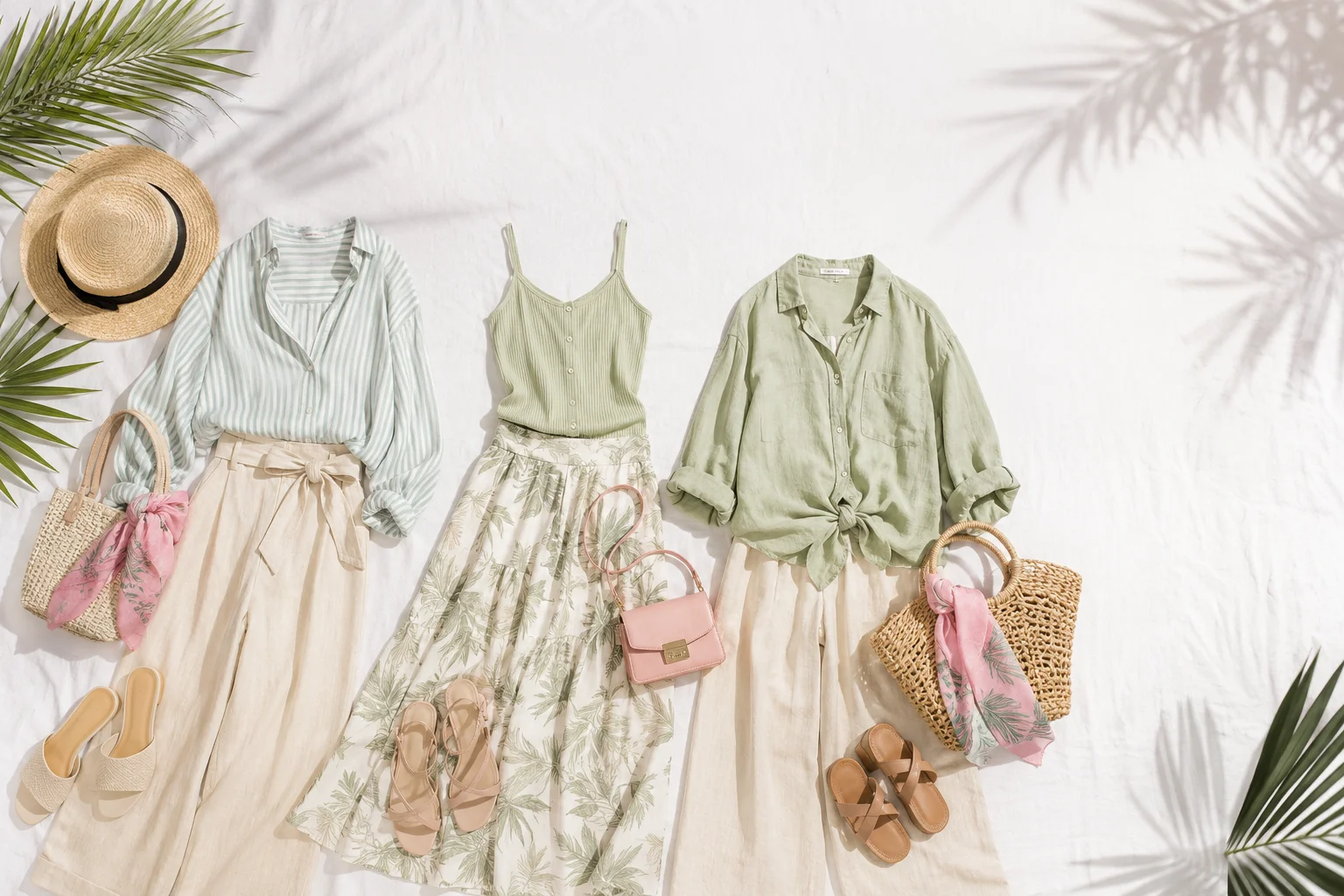
Your safest bet is either a breathable natural fabric like linen or cotton, or a high-function fabric with cooling or UV-cut properties. That said, which one suits you better also depends on your body shape type.
| Fabric type | Advantages | Things to watch for |
|---|---|---|
| Natural fabric (linen, cotton) | Highly breathable and visually cool; structured fabric also adds polish | Stiff linen can look heavy on a Wave type; a softer-draping fabric like crepe or linen-blend chiffon tends to suit them better |
| High-function fabric (cooling, UV-cut) | Delivers measurable coolness; often resistant to sweat marks and losing its shape | Some synthetic fabrics look lightweight but have poor breathability, so always check the fabric label |
The one thing I always check on the tag when choosing fabric is the “Q-max value.” From experience, 0.2 or higher tends to deliver a noticeable cooling sensation. Having selected fabric for well over 100 client outfits a year as a stylist, my hands-on sense is that a Q-max value around 0.2 is exactly the line between “genuinely feels cool” and “feels lukewarm at best.”
What are the key points for dressing age-defying by body shape type in year-round summer heat?
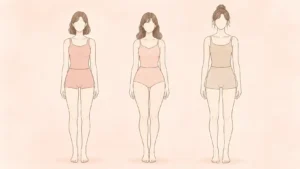
Each body shape type tends to lose its shape in a different spot under heat, which makes type-specific strategies especially effective in tropical weather. If you’re still not sure of your own type, it’s worth also reading For Anyone Whose Body Shape Diagnosis Keeps Changing: A 5-Minute At-Home Self-Check Using Your Collarbone and Wrist.
Tropical outfits for the Straight type
A Straight type is characterized by a subtler collarbone and shoulder blades, with more presence through the chest and hips. Fabric that’s too soft tends to lose its shape and read as frumpy, so to prevent that from happening under sweat, a shirt dress or I-line set in high-function fabric that holds its structure is your best bet.
A common issue I hear about: “I chose a soft T-shirt fabric to prioritize coolness, and it ended up sticking to me with sweat and showing every line of my body.” For a Straight type, the rule is to prioritize “structure” over “coolness.”
*Photos are for illustration of the outfit concept only.
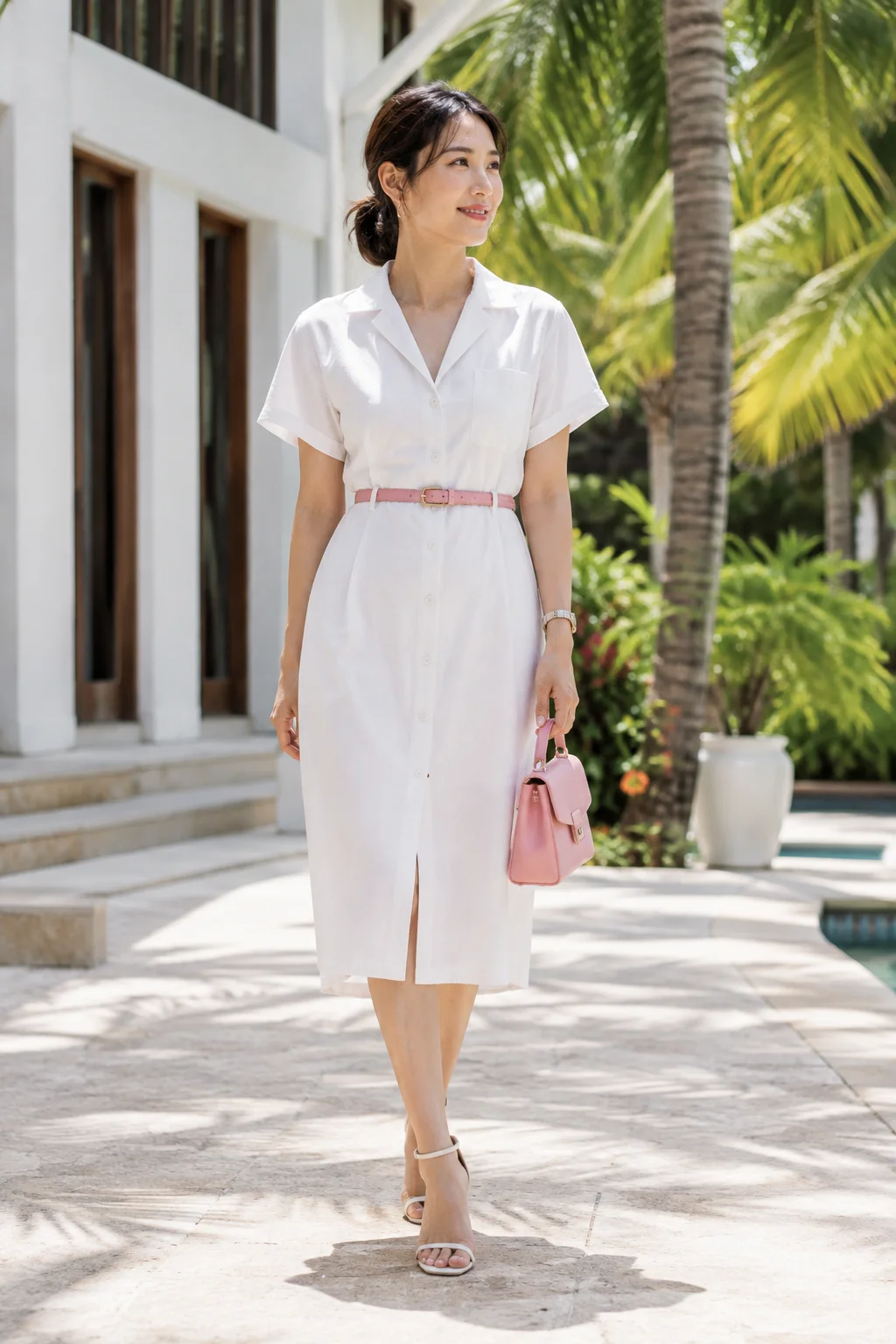
Check out this [cooling structured cotton short-sleeve shirt dress in solid navy, knee length]:
Amazon /
Yahoo! Shopping
Check out this [UV-cut structured collarless jacket × straight pants set in beige]:
Rakuten
Tropical outfits for the Wave type
A Wave type is characterized by thin, delicate bones at the collarbone and wrist, with weight carried more in the lower body. Choosing prints or a flared silhouette that sways softly and lightly draws the eye elsewhere, which both hides sweat marks and helps avoid an aging impression.
The opposite mistake I see a lot: “I went too thin, and it wasn’t just sweat marks — my underwear showed through.” My advice from the field: whenever sheerness is a concern, always hold the fabric up to the light near your upper arm to check before buying.
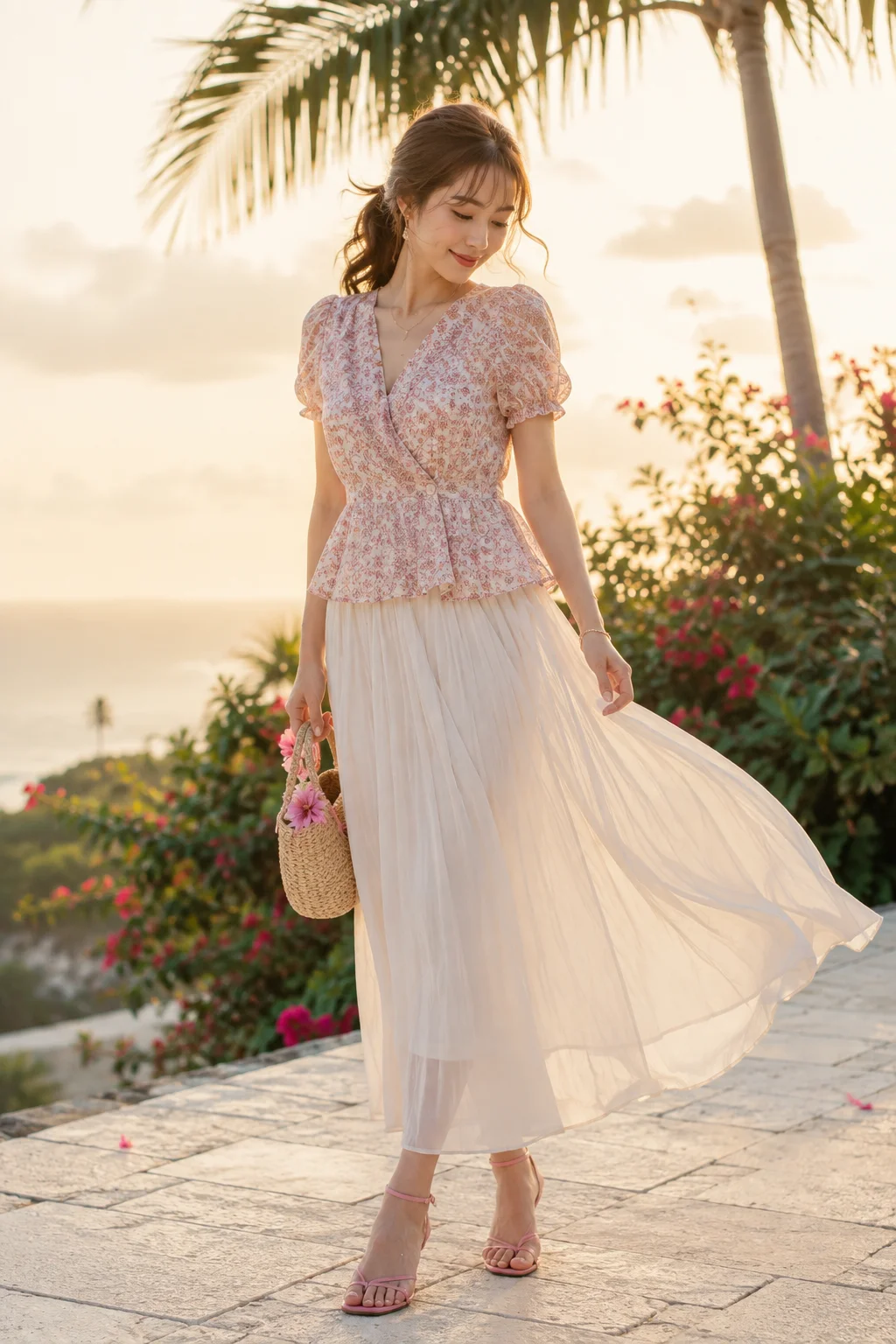
Check out this [floral flared blouse in navy and white]:
Rakuten
Tropical outfits for the Natural type
A Natural type is characterized by solidly built shoulder joints and wrists, giving your body’s lines a more linear look. You pair beautifully with raw-textured natural fabrics like linen, and even a relaxed silhouette can look slimming as long as the fabric holds a bit of structure.
A common mistake for Natural types is going too casual with a T-shirt-and-shorts combination to prioritize coolness, which can leave your shape looking undefined and sloppy since nothing picks up your figure. The trick is to control that looseness through the fabric’s structure.
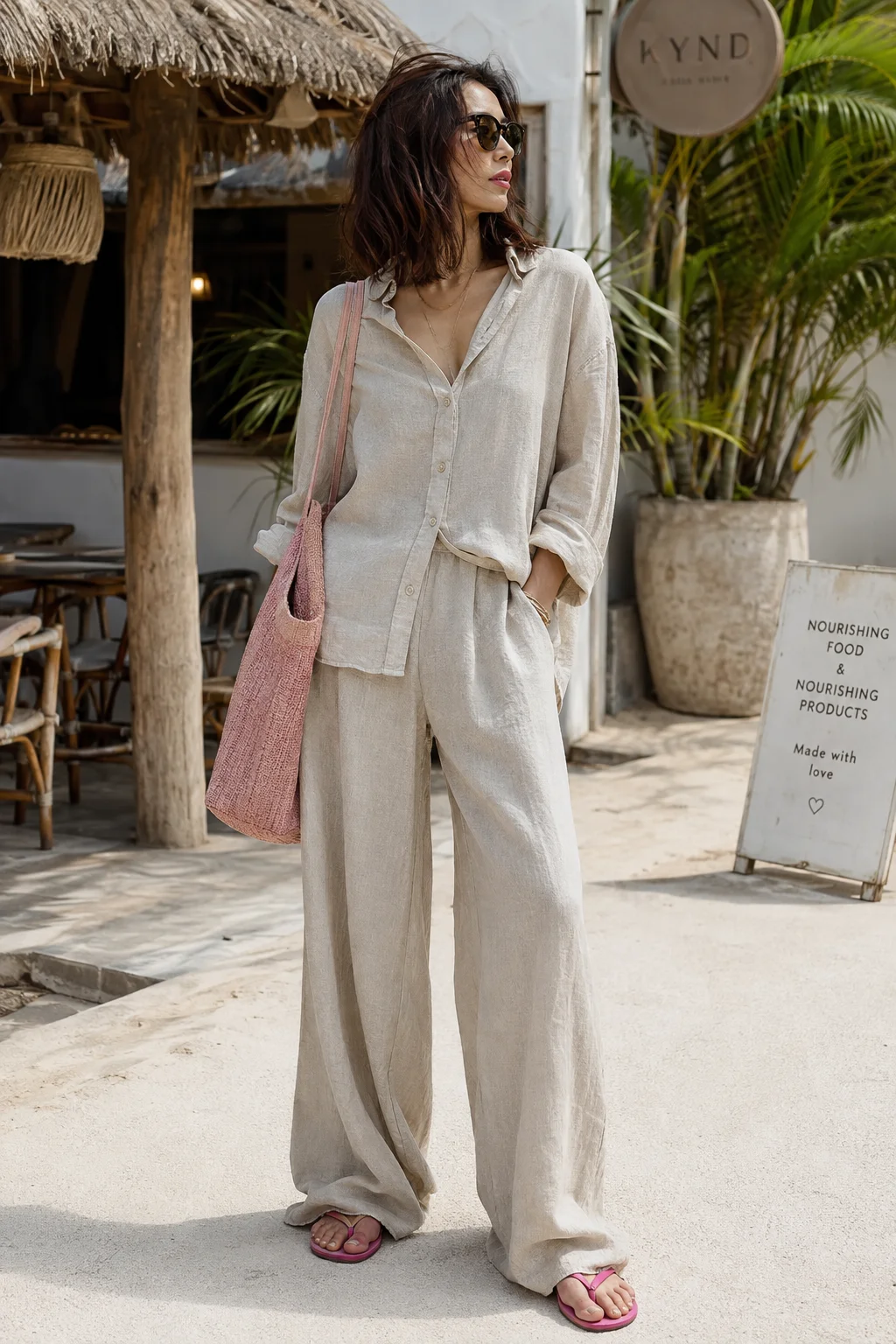
Check out these [linen-blend wide tapered pants in beige]:
Amazon
For a Natural type, hemming your pants so a little ankle shows adds an effortless touch and reads even more slimming.
*For reference: GU’s official site also carries wide pants in a similar fabric feel (see the GU official site here).
What’s the pro trick for preventing sweat marks and clamminess?
Just adding a single padded tank top as an inner layer handles sweat-mark prevention and a clean silhouette at once. This is a piece I actually rely on myself in Malaysia — it doesn’t show your bra lines, and if you choose one in a quick-dry fabric, it meaningfully cuts down on sweat marks too. Above all, having something you can wear as a single layer with confidence makes stepping out on a scorching day so much easier.
How you choose one also depends on your body shape type. Straight types should look for a roomier padded inner that doesn’t pick up too much of your body’s line, Wave types for a fuller-coverage style that plays up your delicate chest, and Natural types for a thin style that doesn’t disrupt your relaxed silhouette — matching it to your type cuts down on mistakes even further.
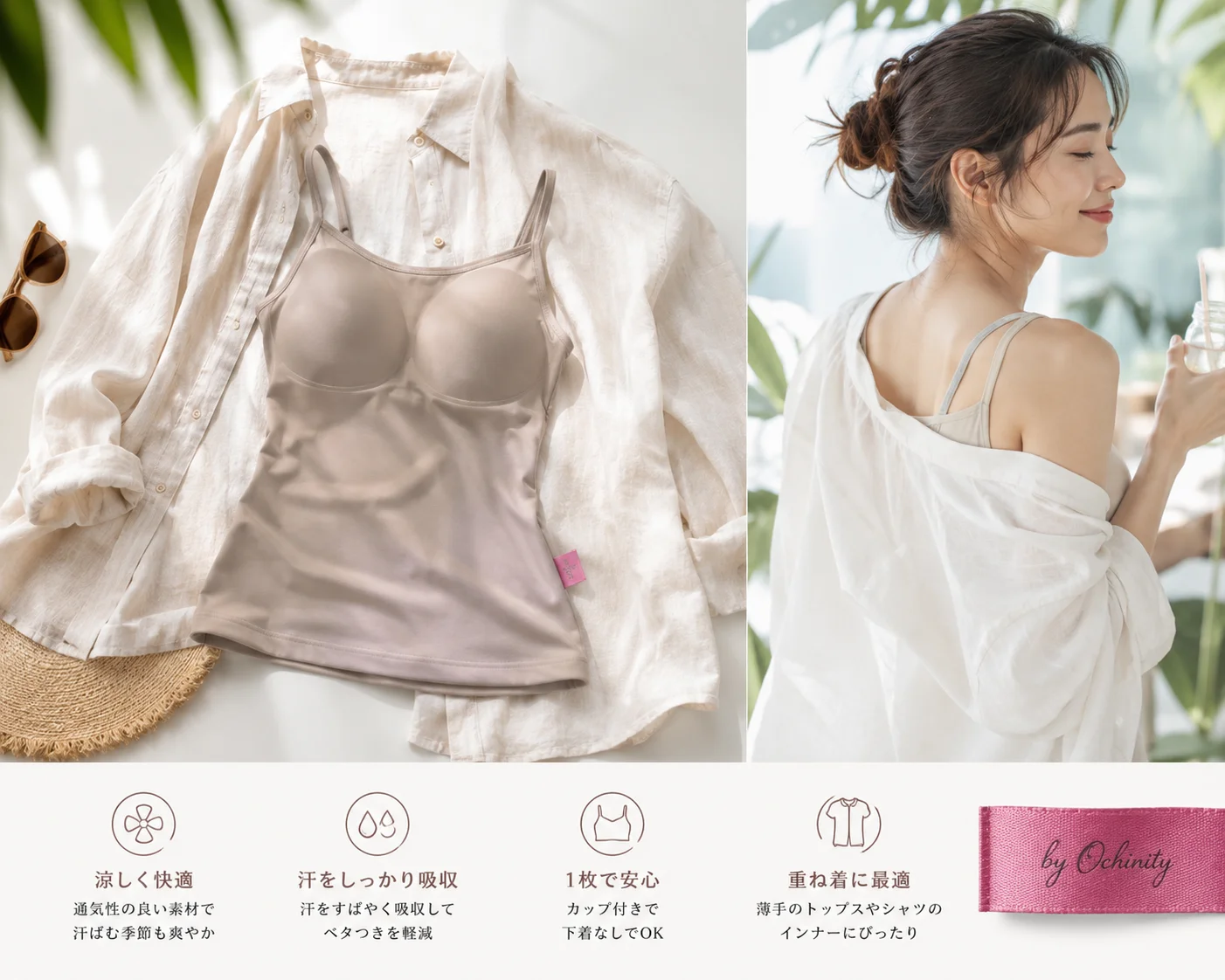
Check out this [padded inner tank with cooling and UV-cut features]:
Rakuten
What should you watch for around dress etiquette in Malaysia?
Out of religious consideration, it’s safest to keep shoulder and knee exposure on the modest side.
Malaysia is a multi-ethnic, multi-religious country, and in areas with a large Muslim population, near mosques, or at formal occasions in particular, it’s best to avoid bare shoulders, a plunging neckline, or extremely short bottoms. Even for office-casual wear, keeping a light layer on hand makes it easy to adjust your coverage as needed.
Choosing that layer by body shape type takes your look up a notch too. A structured collarless jacket suits Straight types, a soft, gently swaying shawl-style wrap suits Wave types, and a long linen-blend cardigan suits Natural types — each keeps coverage modest while still holding the silhouette that flatters your type.
Check out this [UV-cut, cooling lightweight cardigan for layering]:
Amazon
Where do you actually shop for clothes in Malaysia?
Splitting your shopping between the local secondhand store “2nd Street” and the curated fashion rental service “airCloset” is the best way to build a wardrobe that matches your body shape type without adding to your luggage.
Malaysia does have 2nd Street locations, and it’s a great place to pick up natural-fiber pieces at a low price. When hunting for finds there, Straight types should look for structured fabric, Wave types for prints, and Natural types for oversized linen and cotton pieces — keeping your body shape type in mind makes it much easier to spot things that actually suit you, even from local secondhand stock.
On the other hand, for items that need finer silhouette adjustments tailored to your body shape type, using a Japanese fashion rental service lets you widen your options without eating into your suitcase space. A well-known example is the monthly subscription rental service airCloset, where professionally chosen outfits arrive on a regular basis, tailored to what suits your body shape type. Some of my clients time their deliveries around a trip back to Japan.
If you still don’t know your own body shape type, I’d recommend starting with an online body shape diagnosis designed for women living abroad.
Looking older in year-round summer heat has nothing to do with your actual age. Choosing fabric that doesn’t match your body shape type will make anyone, of any type, look older.
Quick-reference checklist: tropical outfits by body shape type
| Body shape type | Fabric to choose | Mistakes to avoid |
|---|---|---|
| Straight | Structured, high-function fabric (shirt dress, matching set) | Soft fabric losing its shape and picking up your body’s lines |
| Wave | Prints and lightweight, flared fabric | Going too thin and showing sheerness or sweat marks |
| Natural | Structured linen, relaxed silhouette | Going too casual and looking undefined and sloppy |
Frequently Asked Questions
Q1. What kind of fabric should I choose for Malaysia?
A. Natural fabrics like linen and cotton, or high-function fabric with cooling or UV-cut properties, are both good choices. That said, which one works best for you depends on your body shape type, so it helps to choose with your own type in mind.
Q2. Can I still get a body shape diagnosis while living abroad?
A. Yes, an online diagnosis service works perfectly well even if you live overseas. See this article for more on how to go about it.
Q3. What’s the single biggest thing to watch for with dress etiquette in Malaysia?
A. Keeping shoulder and knee exposure modest. It’s especially reassuring to have a light layer ready near mosques or at formal occasions.
Q4. Where’s a good place to buy clothes in Malaysia?
A. I’d recommend combining the local secondhand store “2nd Street” with the Japanese fashion rental service “airCloset.”