
You’ve probably heard the term “body shape diagnosis,” but wondered, “so which type am I, actually?” or “can I really figure this out myself?” Body shape diagnosis is a way of classifying the fashion styles that suit you into three types — Straight, Wave, and Natural — based on your natural bone structure, muscle, and how you carry fat. You don’t need to visit a salon: if you know the right checkpoints, you can diagnose yourself perfectly well at home. In this article, drawing on thirteen years as a professional stylist, I’ve put together a complete guide to doing your own self-check.
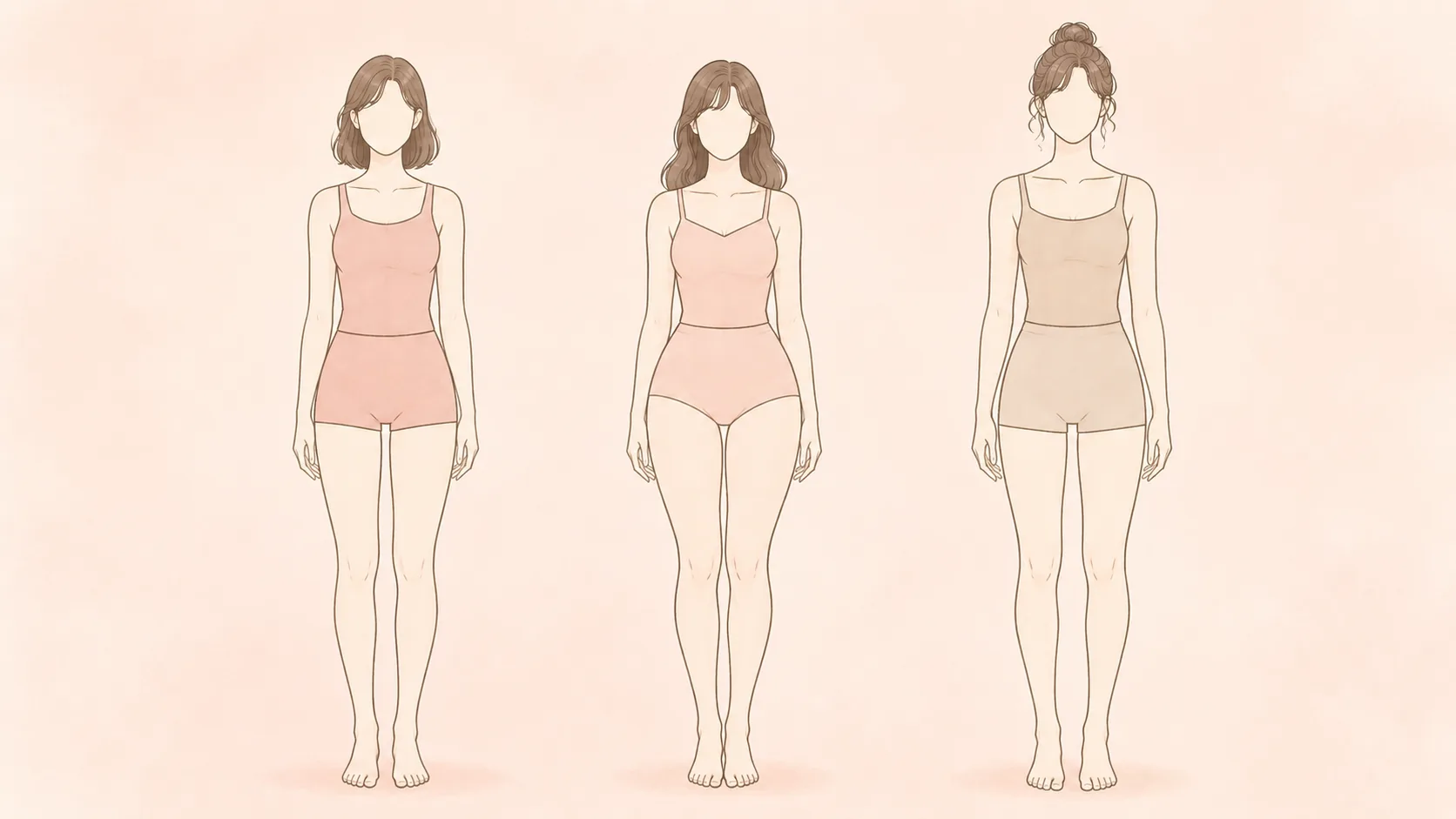
What is body shape diagnosis? Getting to know the three basic types
Body shape diagnosis isn’t about your weight or how slim you look — it’s a framework based on the quality and amount of your bone structure, muscle, and fat. Two people can share the same height and weight and still suit completely different silhouettes and fabrics once their body shape type differs. Let’s start with a broad look at the three types.
| Type | Physical characteristics | Fabrics that suit you |
|---|---|---|
| Straight | Solid muscle with real body presence; weight is carried in the upper body | Fabric with structure and body; simple designs |
| Wave | Delicate, slender bones with a curved line; weight is carried in the lower body | Soft fabrics; feminine details |
| Natural | Solid, prominent bones and joints; has a strong overall frame | Textured, casual fabrics; relaxed silhouettes |
Before you self-check: how to prepare
For an accurate diagnosis, get ready with the following before you begin.
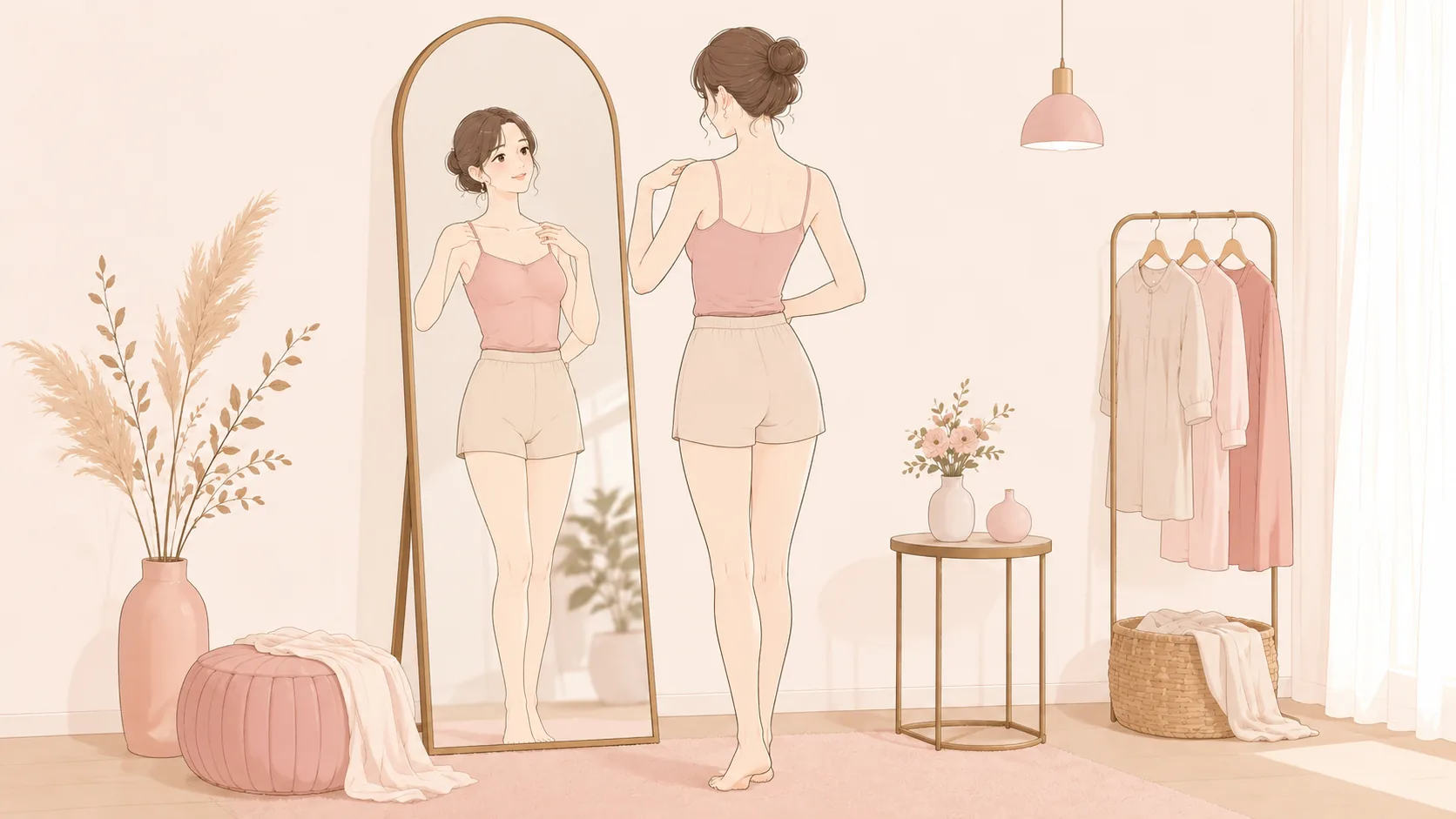
- Change into something thin enough to show your body’s true lines (a camisole with fitted bottoms works well)
- Stand in front of a full-length mirror
- If possible, have a family member or friend look with you (relying on your own perception alone makes it easy to misjudge)
- Do the check somewhere bright, with natural light
The body shape self-check list (8 checkpoints)
Go through the following checkpoints one by one in front of the mirror. Whichever type you match on the most items is most likely your body shape type.
Check #1: Collarbone area
- Collarbone isn’t very visible, sits under the skin → Straight
- Collarbone is visible but thin and delicate → Wave
- Collarbone is large and clearly defined → Natural
Check #2: Wrist and joint size
- Wrist is slim, joints aren’t prominent → Straight
- Wrist is delicate and thin → Wave
- Wrist is thicker, or the bone is solidly built → Natural
Check #3: Bust position and fullness
- Bust sits high with noticeable fullness → Straight
- Bust sits a little lower, flatter in profile → Wave
- Bust presence is understated, overall flat → Natural
Check #4: Neck length and thickness
- Neck is on the shorter side with some thickness → Straight
- Neck is slender and long → Wave
- Neck length is middling but has a bony impression → Natural
Check #5: Hip position
- Hips sit high → Straight
- Hips sit low and spread wider → Wave
- Hips are flat, with a middling position → Natural
Check #6: How muscle develops
- Muscle builds easily, giving a solid sense of body → Straight
- Fat builds more easily than muscle, giving a soft impression → Wave
- Neither muscle nor fat builds up easily; bone structure stands out → Natural
Check #7: Palms and fingers
- Palms have some thickness, fingers are on the shorter side → Straight
- Palms are thin, fingers are slender and supple → Wave
- Palms are large, joints are solidly built → Natural
Check #8: Overall silhouette
- Straight, sharp impression → Straight
- Curved, soft impression → Wave
- Large frame, casual impression → Natural
How to read your results: about mixed types
If you came out roughly half Straight and half Wave, you’re far from alone — plenty of people carry the features of two types at once, known as a “mixed type.” In that case, it’s perfectly fine to base your styling on whichever type you matched more often, while borrowing elements from the other type as well. When you’re unsure, using where your weight sits — upper body versus lower body — as your tiebreaker makes the decision easier.
Common mistakes in self-diagnosis
- Judging by how slim you are or your weight: Being slim doesn’t automatically mean you’re a Wave type. Your body shape type doesn’t change much even as your weight fluctuates.
- Judging by the silhouette of the clothes you’re currently wearing: Always check wearing something that shows your body’s actual lines.
- Deciding based on a single checkpoint: It’s important to weigh all eight checkpoints together rather than settling on the first one that fits.
In summary: next, learn what suits your specific type
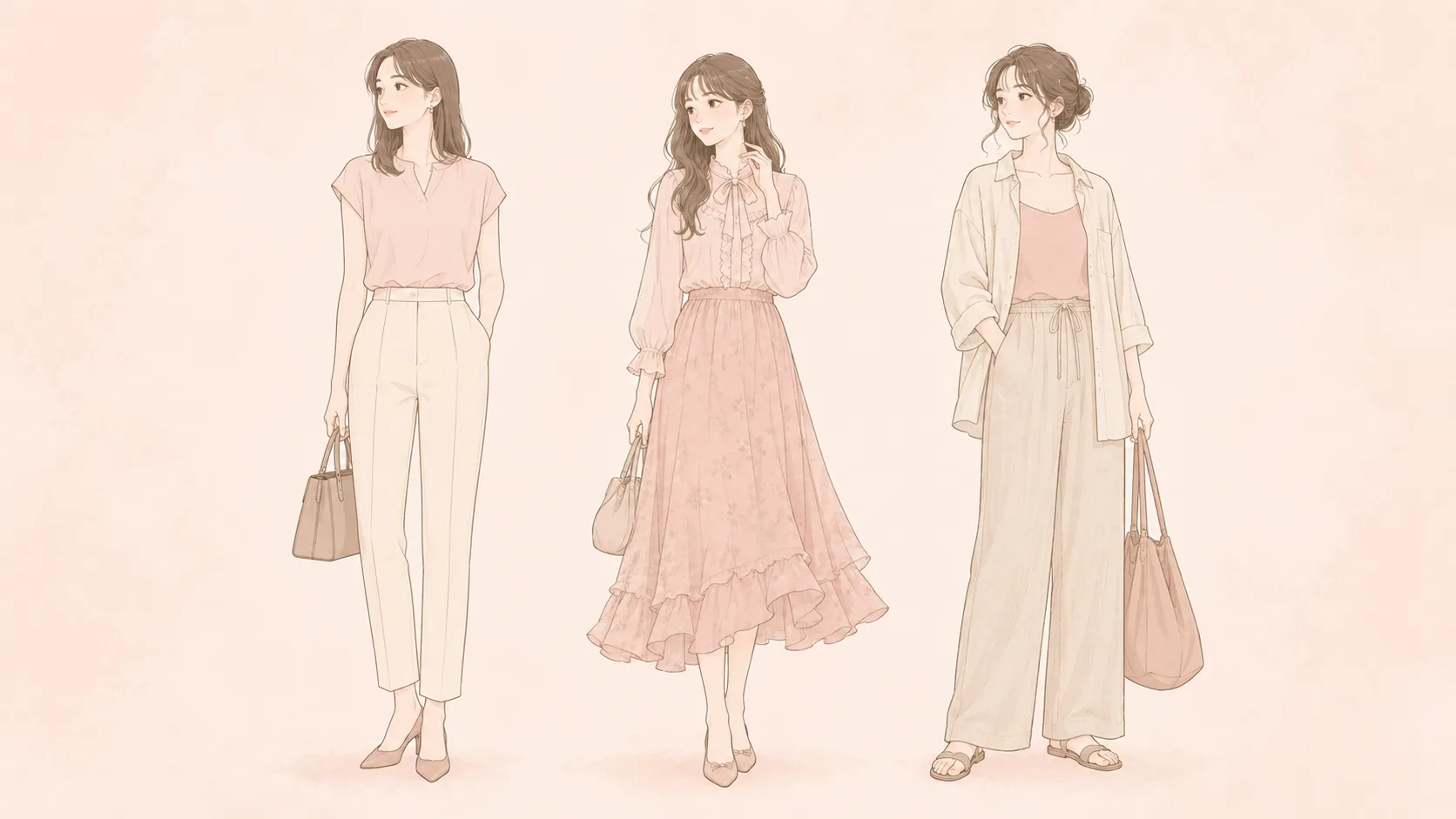
Body shape diagnosis is a powerful tool for finding “clothes that suit you right now,” regardless of your weight or age. Once your self-check has given you a good idea of your type, the next step is to dig into that type’s detailed features and the items that suit it.